Wood Furniture and Stock Profiles
Before polymer took over in the 1970s, almost every gun had wood somewhere. The stock, the handguard, the pistol grip, or all three. That wood was not just a material choice. It was a design signature that tells you where the gun came from, when it was made, and what the designer thought mattered.
Two guns can have nearly identical receivers and barrels but completely different personalities because one has sleek walnut and the other has blocky birch. Learning to read these differences is like reading handwriting. Same letters, different hands.
Why wood matters
A long, smoothly tapered stock indicates a designer who cared about aesthetics. A short, thick, slab-like stock suggests someone who cared about durability and cheap production. A two-piece stock with a visible joint tells you the manufacturing involved separate milling operations rather than carving from a single blank.
Countries with abundant hardwood forests used walnut, cherry, or other dense woods. Countries with limited timber used birch, pine, or laminated plywood. Pre-war German rifles have dark, rich walnut with fine checkering. Soviet rifles of the same era have pale, crude birch that looks almost unfinished. Both work fine. One looks refined. The other looks brutal.
The full-stock rifle tradition
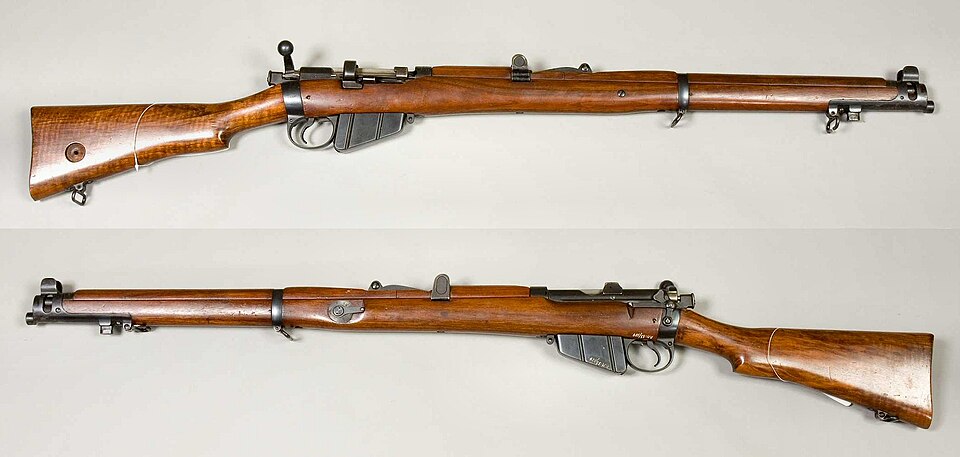
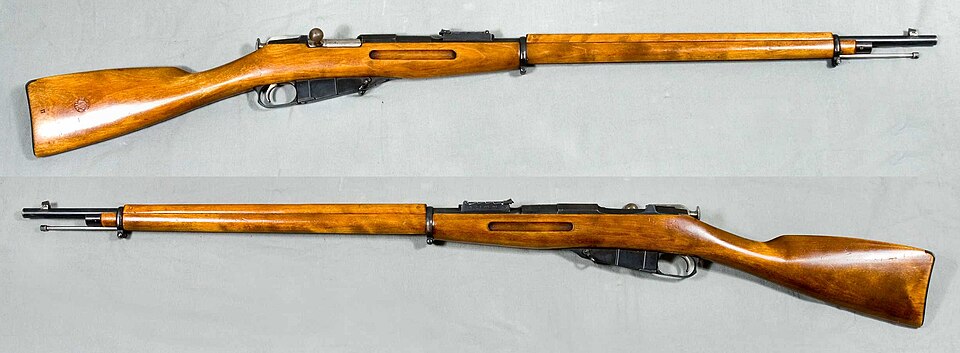
Before the twentieth century, most rifles had stocks that ran almost the entire barrel length. This "full stock" protected the barrel, added weight for stability, and provided a continuous gripping surface. The British were particularly fond of this. A Lee-Metford or early Lee-Enfield has wood that reaches nearly to the muzzle.
German rifles of the same period often had a "half stock" ending around the middle of the barrel. The Mauser Gewehr 98 has a stock that stops roughly halfway, with a metal barrel band marking the transition. This became the dominant pattern worldwide after 1900, but the British clung to full stocks longer than most.
American rifles had their own take. The Springfield 1903 has a stock that looks German in its half-stock configuration, but with a distinctive grasping groove carved into the side. If you see a grasping groove, you are looking at an American design.
The pistol grip question
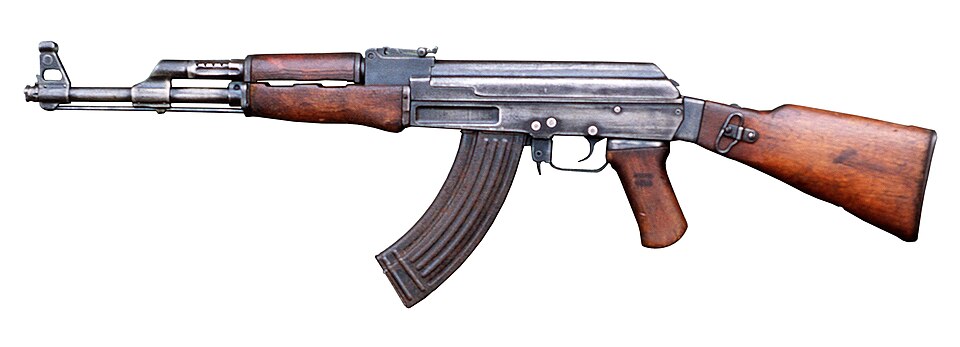
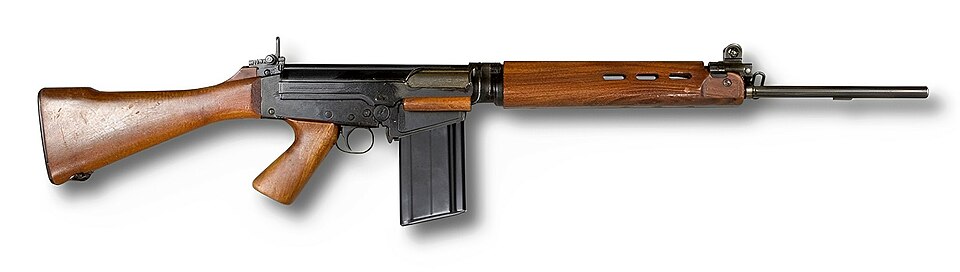
One of the biggest visual divides is the presence or absence of a pronounced pistol grip. Traditional military rifles through World War II almost universally had straight stocks that merged smoothly into the grip area. It works. It is simple to manufacture. But it is not the most ergonomic shape.
After 1945, pistol grips appeared everywhere. The FN FAL has a clearly separated grip that juts backward from the trigger guard. The AK-47 technically has a separate grip, though it is so short and stubby that it almost blends into the stock. The American M14 tried to split the difference with a semi-pistol grip, a halfway shape that pleased nobody.
The presence of a pistol grip tells you the rifle was designed after 1945. European grips tend to be more vertical. American grips angle slightly backward. Russian and Chinese grips are usually the simplest: short, blocky, almost like an afterthought.
Handguard styles
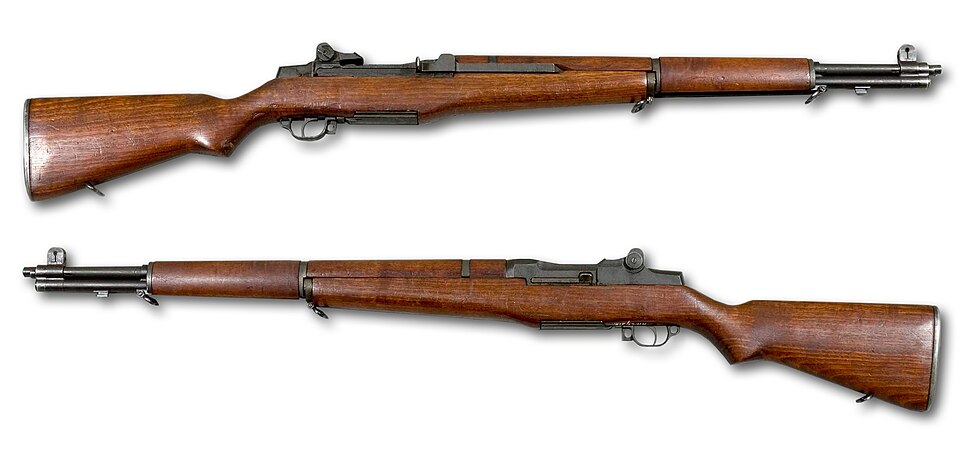
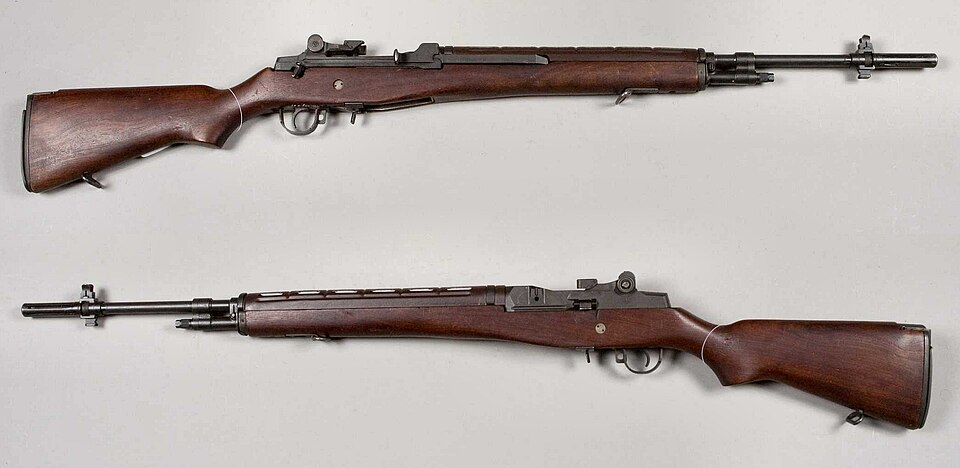
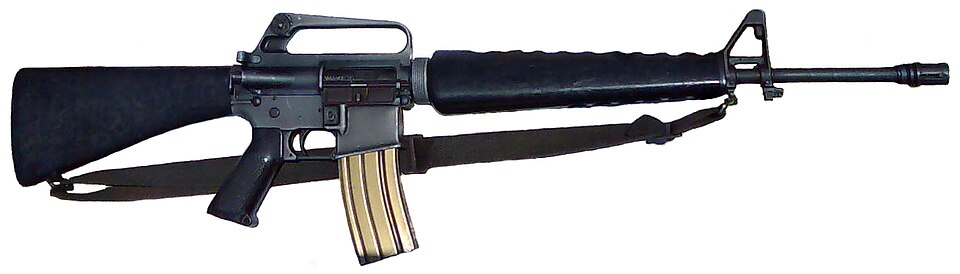
British rifles are famous for narrow, almost delicate handguards. The Lee-Enfield has a slim piece of wood that looks like it could snap. German handguards of the same era are thicker with visible reinforcing ribs. American handguards tend to be wider and flatter.
When semi-automatics became standard, handguards grew larger because barrels got hotter. The AK-47 has a handguard that is almost a tube: two pieces of wood that clip around the barrel. The M16 has a round, ribbed handguard that looks like a ventilated tube. The FAL has a slotted handguard with visible metal heat shields underneath.
Stock shape and national character
Russian and Soviet stocks have a family resemblance from the Mosin-Nagant through the AK-47. Thick, blocky, almost crude. Usually birch, pale, with minimal finishing. The buttstock is almost a simple plank. There is a practical reason: Russian doctrine assumed soldiers would wear thick winter clothing, so the stock needed to be bulky.
German stocks tend to be sleek and refined. Even wartime Mausers have smooth lines, carefully shaped grips, and pressed checkering. The wood is darker, denser, and finished better. A German rifle from 1940 often has better furniture than a Russian rifle from 1980. Not a quality judgment, just different manufacturing philosophies.
American stocks sit somewhere in between. Springfield 1903 stocks are genuinely beautiful walnut. The M1 Garand kept that tradition alive. But mass production with the M14 and M16 made furniture more utilitarian. The early M16 stock was a simple triangular affair that looked almost temporary.
British stocks are perhaps the most distinctive. The Lee-Enfield family has a stock with a pronounced drop at the comb, more severe than any other major military rifle. The result is a profile that looks almost humpbacked from the side.
The switch to synthetic
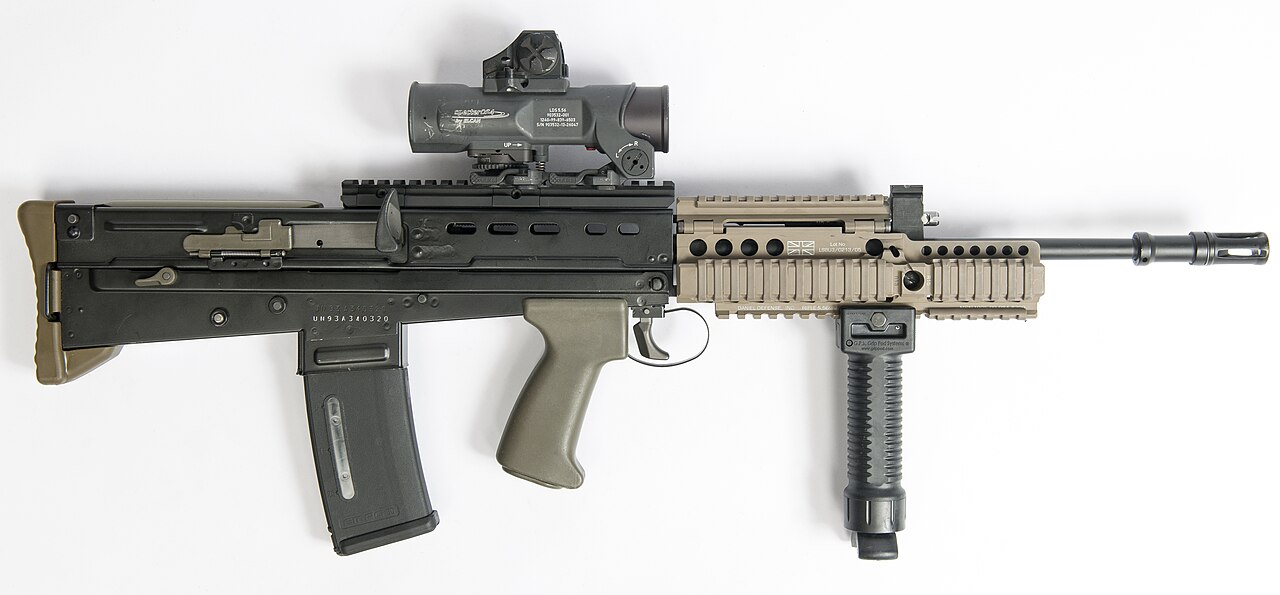
By the 1970s, wood was becoming a liability. It warped in humidity, cracked in extreme cold, and added weight. The switch to synthetic was gradual but inevitable.
The M16A2 introduced a round, ribbed plastic handguard. The British SA80 went all-in with a green plastic stock that looked almost toy-like. The Austrian Steyr AUG was synthetic from the start, which partly explains its alien silhouette.
Even countries that clung to wood eventually switched. The Soviet Union introduced the AK-74 with plum polymer in the 1980s. Today, a wooden AK is almost a nostalgic choice.
Handgun grips
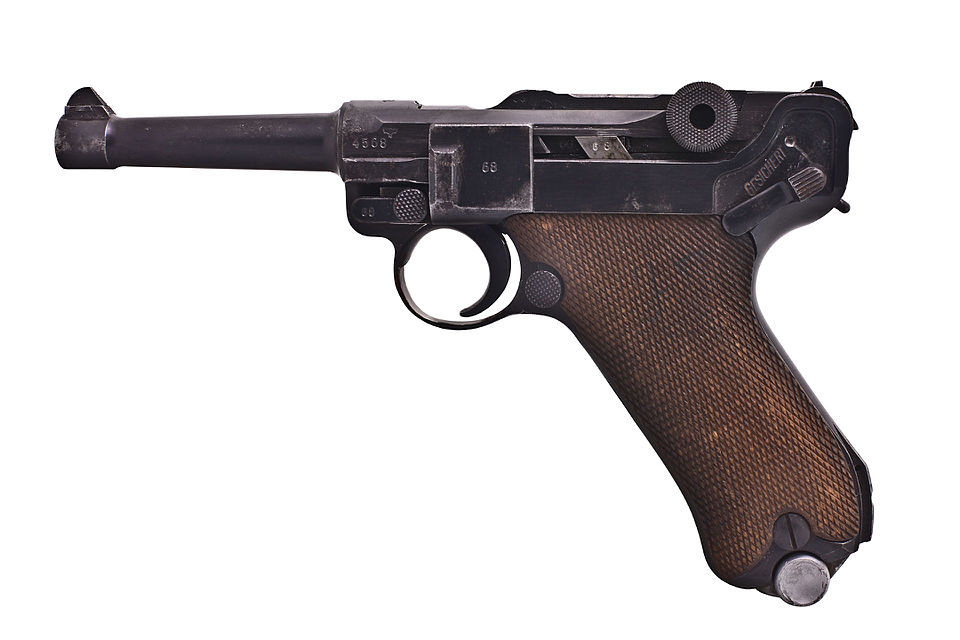
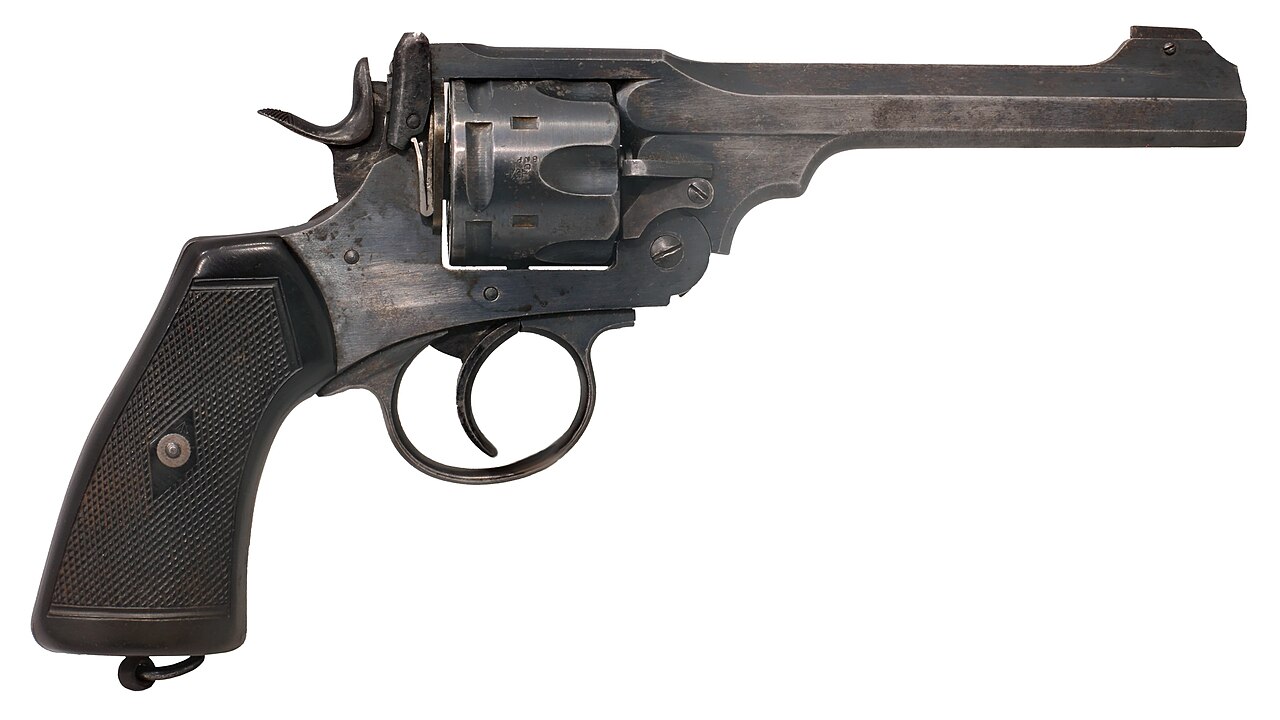
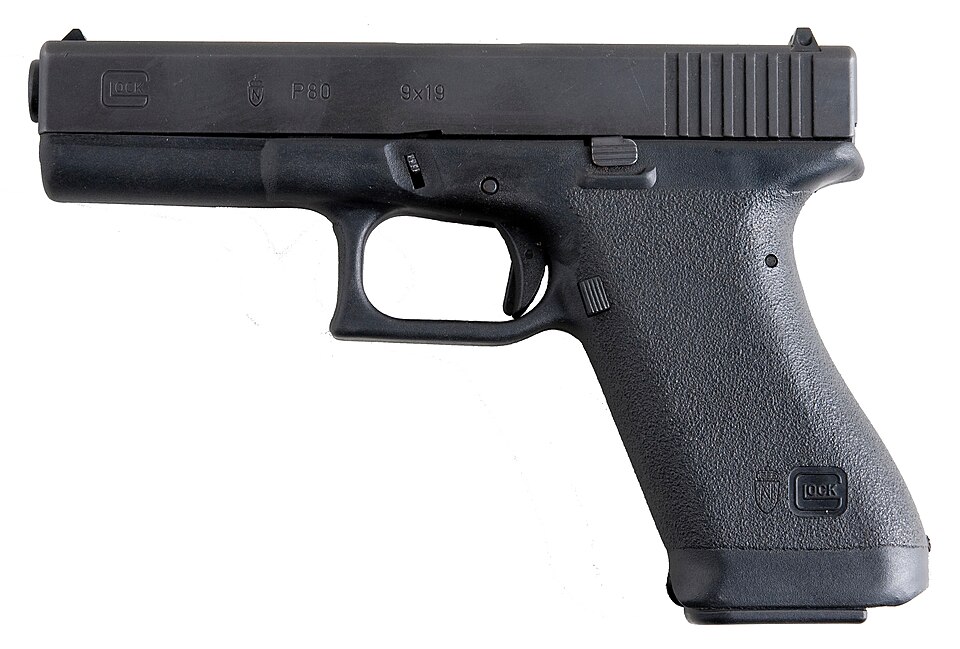
Handgun grips are smaller than rifle stocks but carry just as much information. The Luger grip is slender, angled sharply backward, and covered in checkered wood panels. No other major handgun has that exact angle.
Smith & Wesson revolver grips swell outward at the bottom, creating a pear shape. Colt revolvers tend to have narrower, more vertical grips. The Webley uses a bird's-head grip that curves downward. Once you have seen a few, you can name the country from the grip alone.
Modern polymer handguns mostly converged on similar textures because ergonomic research pointed to the same conclusions. But differences persist. SIG grips are thicker front to back. Glock grips are more square. CZ grips are more rounded.
Reading furniture as history
Wood furniture is not just a material. It is a historical document. The grain tells you what tree grew where. The finish tells you what the factory had available. The shape tells you what the designer thought a soldier needed.
A rough, unfinished birch stock says something different from a polished walnut one. Neither is right or wrong. When you play Gun Guesser, the furniture in photographs is data. Pale and crude points toward Soviet origin. Dark and refined points toward German or pre-war American. A full-length stock with a prominent nose cap points toward British. These are not guarantees, but they are strong signals.
Gun Guesser is an educational geography and history game. We do not endorse, promote, or facilitate the use of firearms. All guides cover external visual characteristics for historical identification purposes only.