Military vs Civilian Firearms: Visual Differences
A military rifle and its civilian counterpart often look almost identical at first. They share the same receiver, the same proportions, even the same furniture. But the differences are consistent and meaningful once you know where to look.
Manufacturers modified military designs for civilian sale for legal, practical, and market reasons. Those modifications left visible traces. This guide covers the most common ones.
Select-fire vs semi-automatic controls
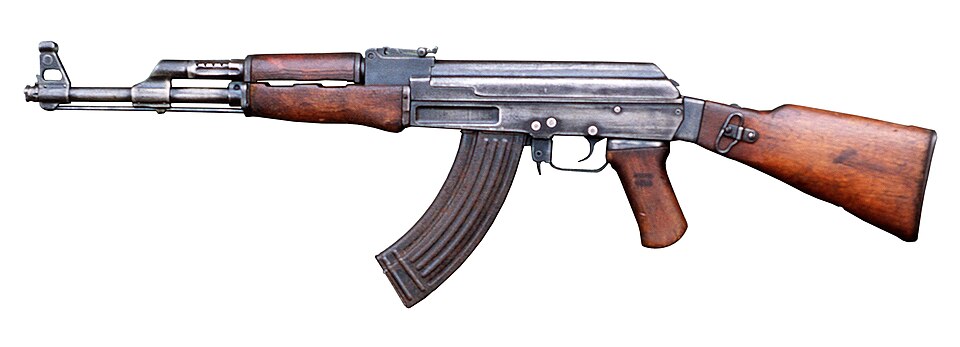
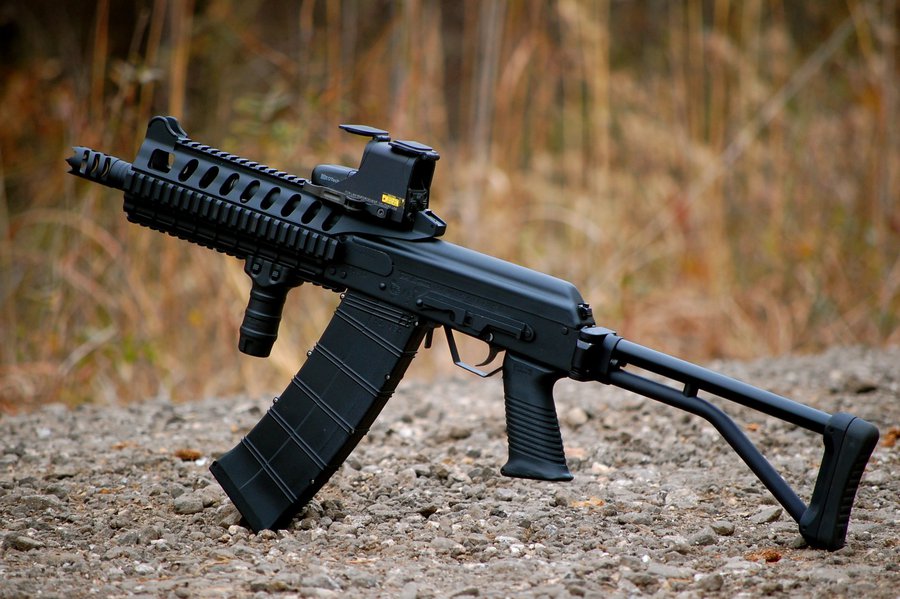
The most fundamental difference is the fire control mechanism. Military assault rifles have select-fire: safe, semi-automatic, and usually burst or fully automatic. Civilian copies are semi-automatic only.
On an AK-pattern rifle, the selector sits on the right side. A military AK has a long lever with positions for safe, semi, and auto. A civilian semi-auto AK has a shorter lever with only two positions: safe and fire. From a clear photograph, this is an immediate identifier.
AR-pattern rifles are even easier. The selector on a military M16 is a rotating switch with positions for safe, semi, and burst or auto. A civilian AR-15 has the same rotating switch but only two or three positions with no automatic setting. The pictogram markings tell the story.
Barrel length and legal minimums
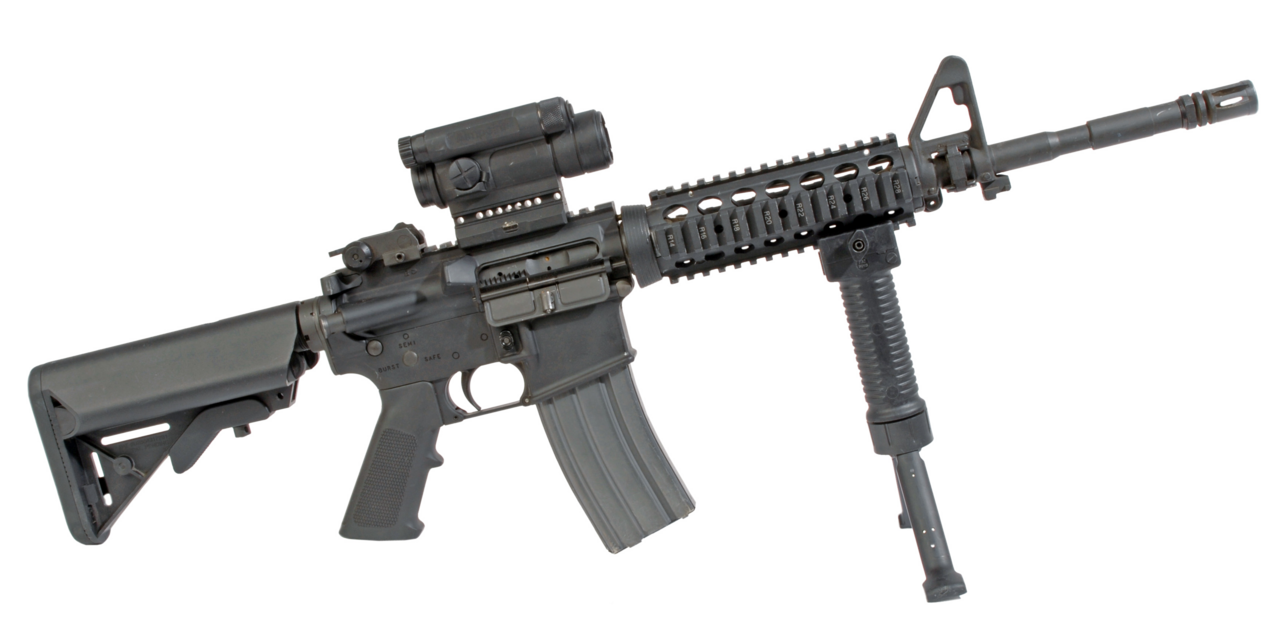
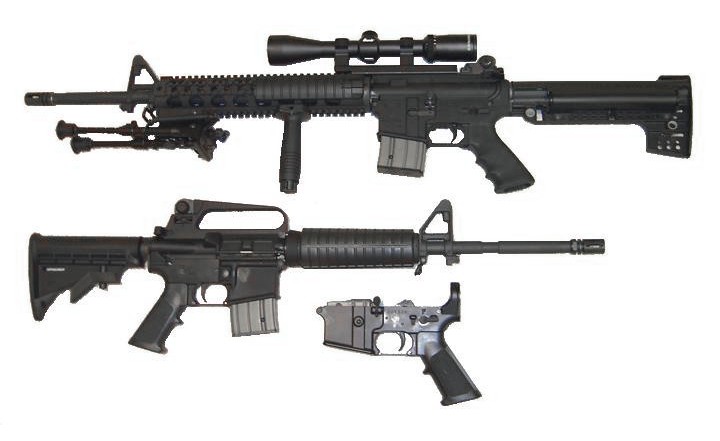
In many jurisdictions, civilian rifles must meet minimum barrel length requirements. In the United States, a rifle with a barrel shorter than sixteen inches is classified as a short-barreled rifle and requires special federal registration. That threshold shaped the civilian market.
The military M4 carbine has a fourteen-and-a-half-inch barrel. The civilian AR-15 typically has a sixteen-inch barrel to meet the legal minimum. The civilian barrel is slightly longer, and the handguard is proportionally longer. The muzzle device often includes a pinned and welded flash hider to bring the total length to sixteen inches.
AK-pattern rifles show the same pattern. Military AKs have short barrels optimized for vehicle crews. Civilian AKs sold in the United States almost always have sixteen-inch barrels, sometimes with permanently attached muzzle devices. The barrel looks longer than you expect for an AK, and that extra length is your clue.
Stock differences and import restrictions
Import laws shaped the appearance of many foreign rifles sold in America. Those restrictions produced visual modifications that are now common identifying features.
The thumbhole stock is one of the most famous examples. Imported rifles were often fitted with thumbhole stocks, which are technically not pistol grips under relevant regulations. A thumbhole stock looks like a rifle stock with a large hole drilled through it where the pistol grip would normally be. Many early Saiga rifles came to the United States with thumbhole stocks.
Another common modification is the fixed stock where a folding stock would normally be. Military rifles like the AKS-74U have side-folding metal stocks. The civilian versions often had fixed wooden or polymer stocks because the folding mechanism triggered import restrictions. A fixed stock on a gun that normally folds is a strong clue.
Magazine well modifications
Some civilian rifles use different magazines than their military parents. The Saiga rifle, a civilian version of the AK, was originally sold with a proprietary single-stack magazine. The magazine well was narrower than a standard AK well, and the gun would not accept standard curved magazines without modification.
A Saiga with its original magazine looks wrong to anyone familiar with AKs. The magazine is too straight, too narrow, and sits at a slightly different angle. Many Saigas were later converted by owners, but in factory form the magazine well is a giveaway.
The HK SL8 is an extreme example. It is a civilian version of the G36, but it uses a proprietary single-stack magazine and has a completely different receiver and stock. The visual differences are so dramatic that most people would not recognize the relationship.
Bayonet lugs and grenade mounts
Military rifles have mounting points that civilian rifles rarely need. Bayonet lugs, grenade launcher mounting points, and bipod hardware are common on service rifles. These are sometimes removed on civilian versions.
A bayonet lug is a small metal protrusion below the front sight base. When it is present, it indicates a military configuration. When it is absent, and you can see a ground-down area where it should be, that is a signal of a civilian-legal modification. Many AKs imported during the 1990s had their bayonet lugs ground off.
The M16 has a stepped barrel profile designed to mount the M203 grenade launcher. Civilian AR-15s usually have a simpler barrel profile without that stepped contour because there is no need to mount a grenade launcher. Flash hiders are another area: some civilian rifles ship with plain muzzle crowns or thread protectors instead of functional flash hiders.
Markings and roll stamps
Military rifles usually have government acceptance stamps and property markings. Civilian rifles have importer stamps and commercial model numbers.
American-imported foreign rifles are required to have the importer's name and city stamped on the receiver. That stamp is often large and placed where it disrupts the original markings. If you see a prominent import stamp from "Century Arms" or "InterOrdnance," you are looking at a civilian market gun.
Commercial names are signals too. A rifle marked "WASR-10" is a civilian Romanian AK. A rifle marked "Arsenal SAM7" is a civilian Bulgarian AK. These names tell you the gun was built for the civilian market even if the underlying design is military.
Hunting adaptations
Some civilian rifles are military designs modified so extensively for hunting that they barely resemble their ancestors. The Russian Tiger rifle is a civilian SVD sniper with a longer barrel, different stock, and no bayonet lug. It looks like an oversized hunting rifle.
British straight-pull rifles are another extreme. Because British law restricts semi-automatic centerfire rifles, manufacturers converted military designs to straight-pull bolt action. The result looks like a semi-automatic from the outside but operates entirely differently. The charging handle is larger and more prominent.
Sporter stocks replace military furniture with traditional hunting stocks that have a Monte Carlo comb, checkering, and refined finish. A military rifle in a sporter stock looks almost unrecognizable. An AK in walnut looks like a hunting rifle from the 1960s.
Putting it together
No single cue proves a rifle is military or civilian. The selector might be hidden. The barrel length might be ambiguous. The stock might have been swapped after purchase. But multiple cues together paint a clearer picture.
A short selector lever, sixteen-inch barrel, thumbhole stock, no bayonet lug, and an import stamp means civilian. A three-position selector, fourteen-inch barrel, folding stock, visible bayonet lug, and military stamps means service rifle. The combinations matter.
In Gun Guesser you are usually looking at historical military firearms, but the database includes enough variety that these cues occasionally matter. Learning to read military versus civilian features deepens your understanding of how firearms spread across countries and markets.
Gun Guesser is an educational geography and history game. We do not endorse, promote, or facilitate the use of firearms. All guides cover external visual characteristics for historical identification purposes only.