Magazine and Feed System Visual Cues
If you can see only one part of a firearm and need to identify it, the magazine is your best bet. The shape, position, and curvature of that box tells you more than almost any other single feature.
I used to ignore magazines when I looked at guns. They seemed like boring accessories. Then someone pointed out that the curve is literally dictated by the taper of the cartridge case, and that taper is a deliberate engineering choice. Suddenly magazines became a map of national decisions about ballistics and manufacturing.
Why magazines curve
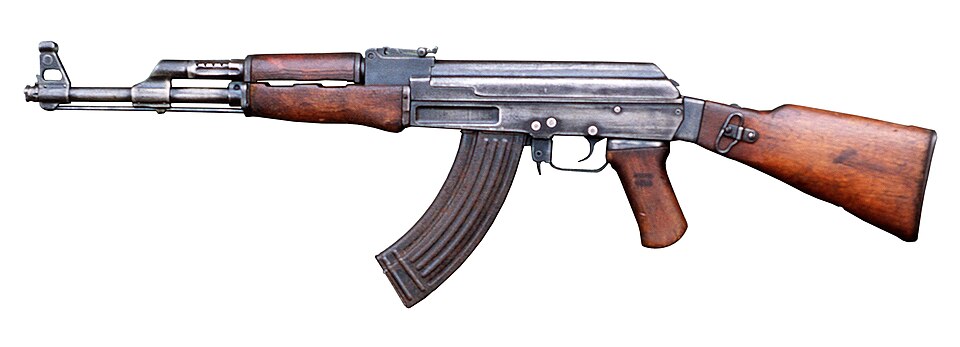
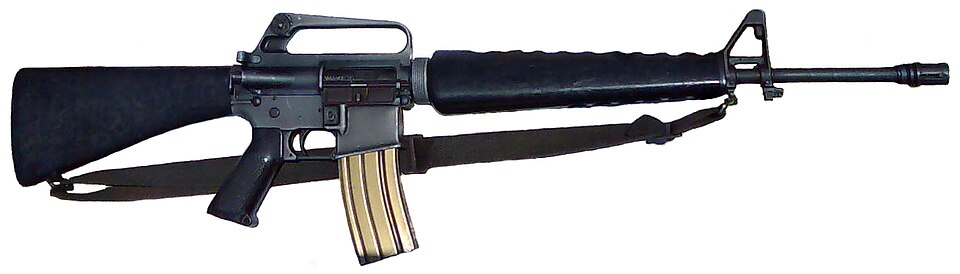
A curved magazine follows the natural stacking geometry of tapered cartridges. When you stack tapered objects in a box, they form a curve. A straight magazine has to fight that geometry with complicated feed lips. The presence or absence of a curve is not an aesthetic choice. It is a direct reflection of the ammunition.
Soviet and Russian ammunition uses heavily tapered cases. The 7.62x39mm has a pronounced taper from base to shoulder. That taper feeds reliably in dirty conditions and stacks beautifully in a curved magazine. The iconic banana-shaped AK magazine is not a style statement. It is physics.
American ammunition tends toward straighter cases. The 5.56x45mm NATO round has a gentler taper. The result is a magazine that looks almost straight. Early M16 magazines had a slight curve, but modern STANAG magazines are so nearly straight that they are often described as straight-box magazines.
German intermediate cartridges fall somewhere in between. The 7.92x33mm Kurz round for the StG 44 had moderate taper, producing a magazine with a noticeable but not dramatic curve. You can tell a lot about a country's cartridge priorities just by looking at the magazine profile.
Magazine placement
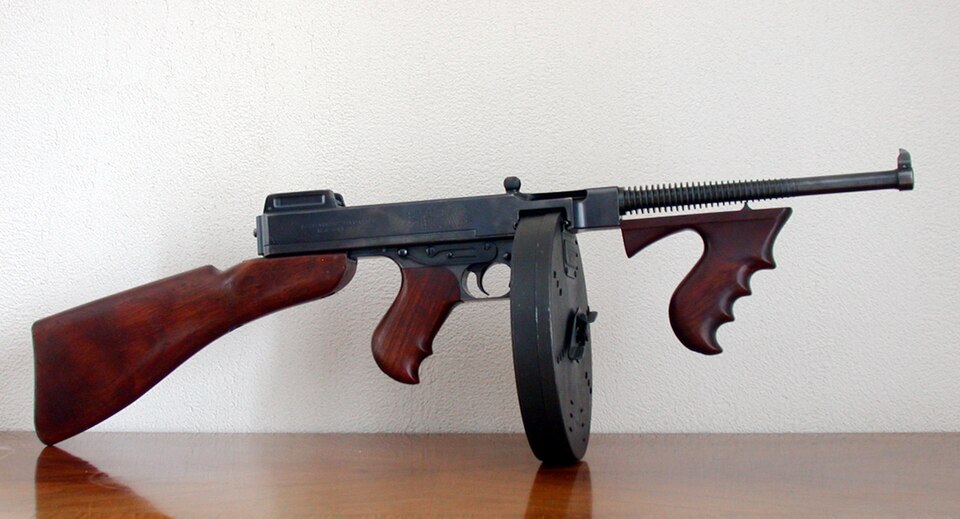
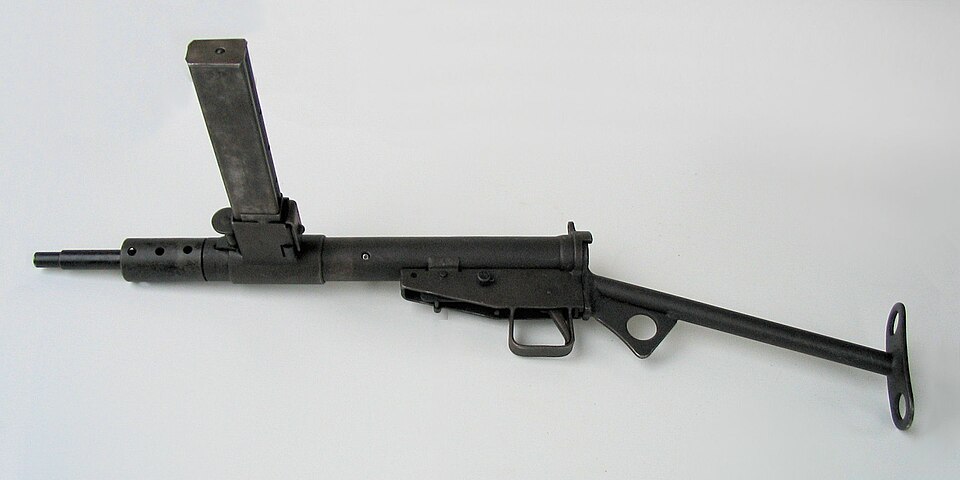
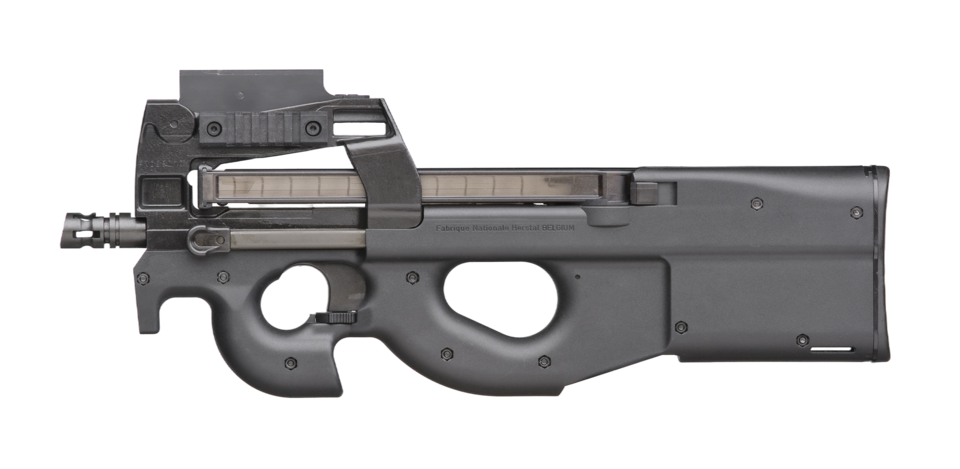
Bottom insertion is the most common today, but it was not always standard. The Thompson used bottom magazines or its famous drum. The German MP 40 used a side-mounted magazine inserted horizontally from the left, creating an asymmetrical silhouette.
The British Sten gun went further, inserting its magazine from the left at a roughly horizontal angle. The result looked almost like a pipe with a magazine sticking out sideways. No other major submachine gun looks that utilitarian.
The P90 introduced a top-mounted magazine that feeds horizontally across the top before dropping rounds into the chamber. That top-mounted box is a visual signature that identifies the P90 from any angle. It also explains the compact size.
Bullpup rifles often have magazines inserted behind the trigger group. The British SA80, French FAMAS, and Austrian Steyr AUG all place the magazine closer to the body. From the outside this creates a rifle that seems too short for its barrel length.
Internal magazines
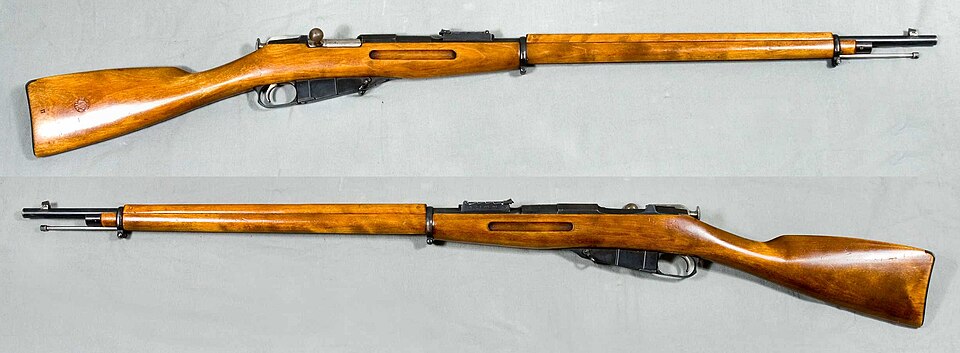
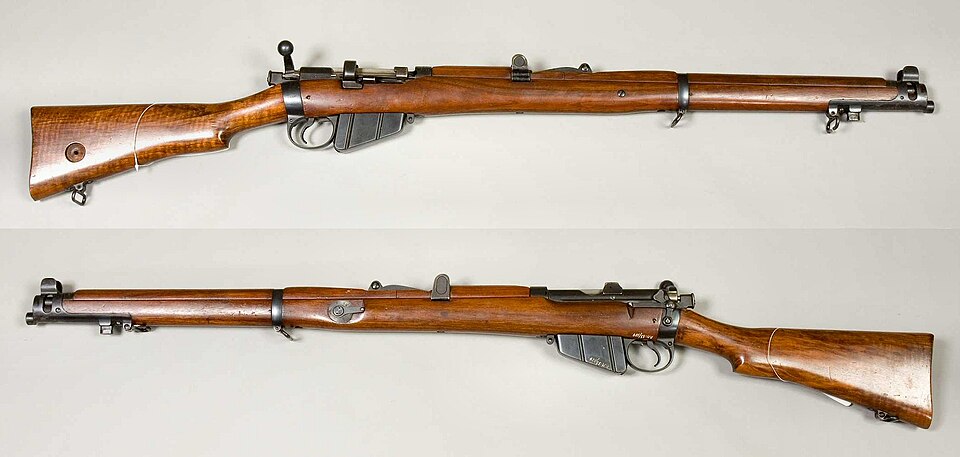
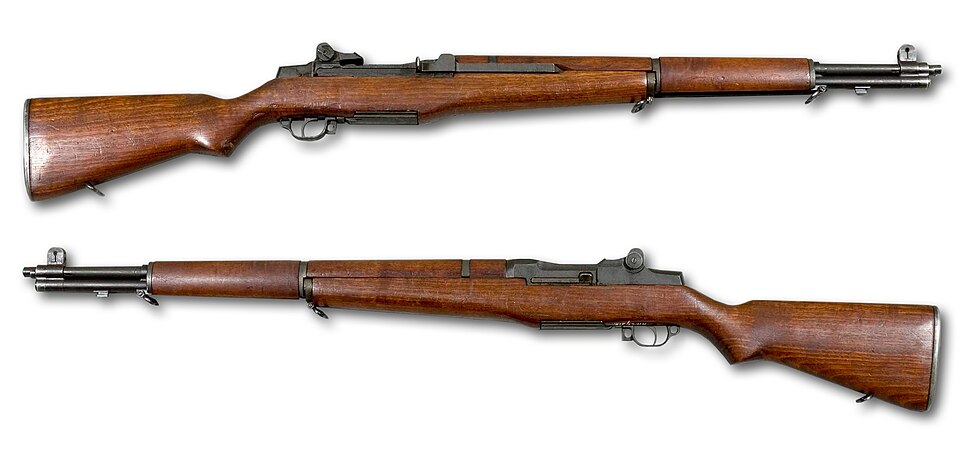
Some firearms have no visible magazine at all. Identifying them is about recognizing what is missing rather than what is present.
Bolt-action military rifles through World War II almost universally used internal magazines. The German Mauser 98 has a five-round internal box. The British Lee-Enfield has a ten-round magazine that protrudes slightly below the stock. The Russian Mosin-Nagant has a five-round magazine barely visible below the stock line.
The Lee-Enfield's protruding magazine is an identifying feature. It is wider and more bulbous than most fixed magazines, and it sticks out far enough to catch light. No other major military bolt-action of that era had a magazine that visible.
The M1 Garand used an internal magazine loaded from the top with an en-bloc clip. The magazine is entirely hidden, giving the Garand a clean, uncluttered underside. That smooth belly separates it from later rifles with detachable magazines.
Drum and pan magazines
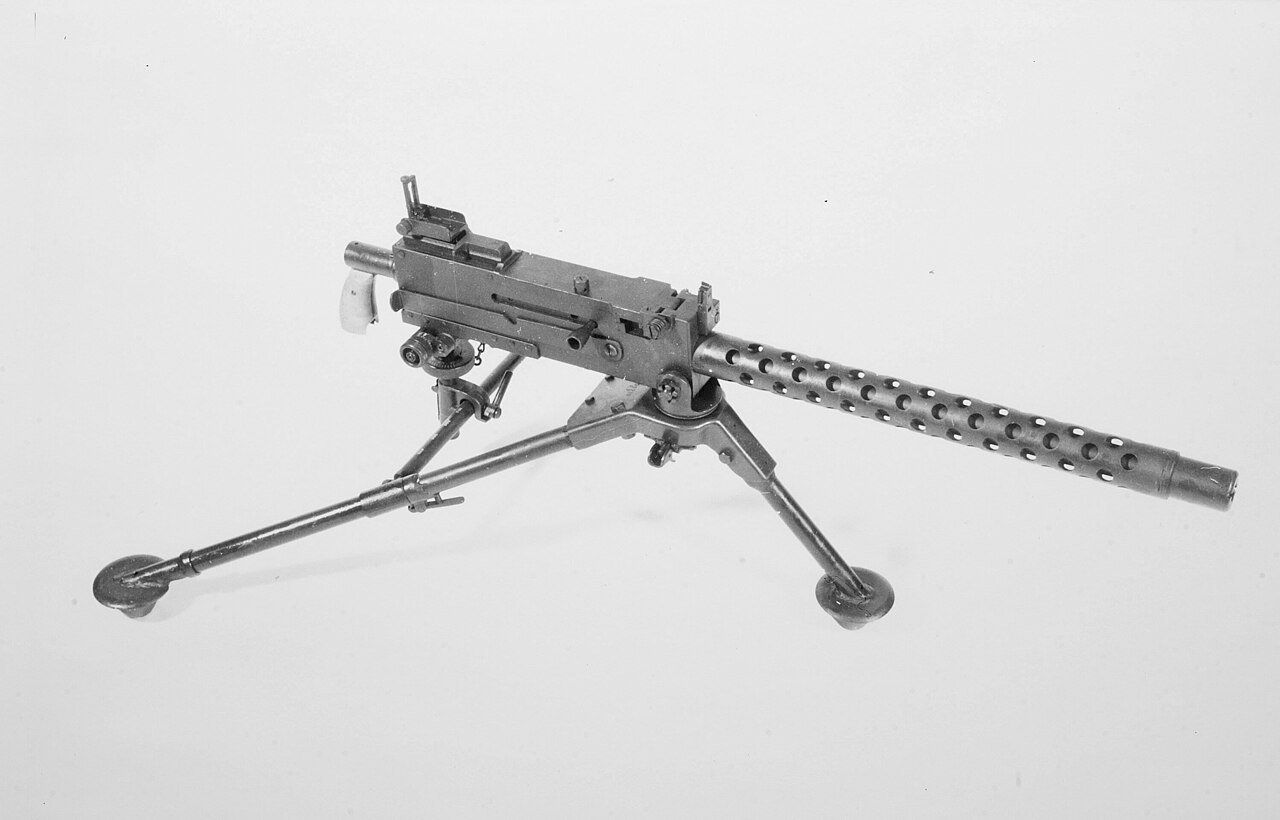
Drum magazines are unmistakable. Circular, bulky, visually dominant. The Thompson is probably the most famous drum user. From a silhouette perspective, the Thompson with a drum looks almost square. It is wide, heavy, and unbalanced, which is partly why drums were less popular in actual military service than in movies.
The Soviet PPSh-41 also used a drum, though its drum holds seventy-one rounds and attaches like a squat cone. Soviet soldiers often preferred the smaller thirty-five-round box magazine for maneuverability, but the drum is what everyone remembers.
Drum and pan magazines fell out of favor after World War II because they were heavy, unreliable, and awkward. Modern drums exist mostly for novelty. If you see a drum on a modern rifle, you are probably looking at a civilian accessory.
Belt feed

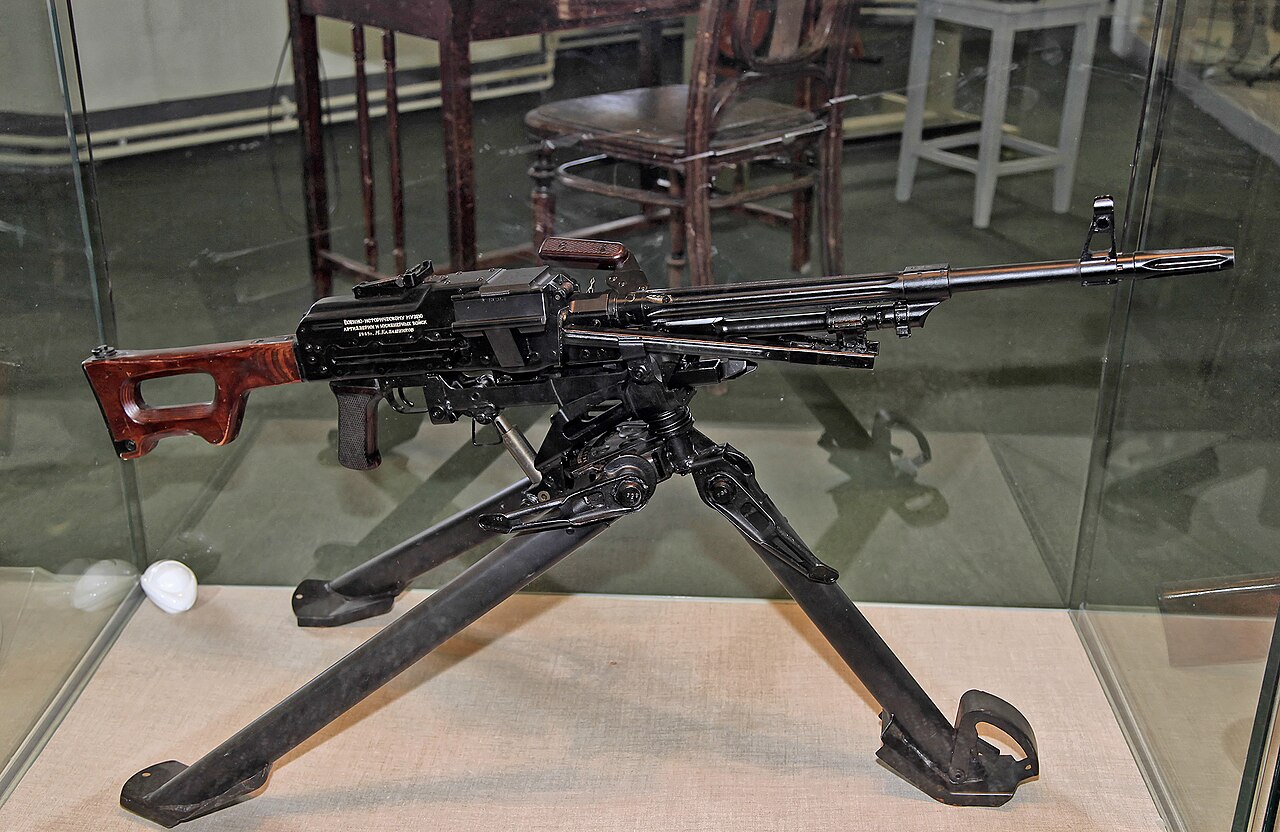
Machine guns often have no magazine at all. They feed from belts. The belt enters through a feed tray or port, usually on the top or side. Once you know what to look for, a belt-fed gun is unmistakable.
The German MG 42 has a top-mounted feed tray. From the side, it looks like a barrel with a grip and a box on top. The American M1919 has a side-mounted feed block that is a prominent rectangular protrusion. Combined with the large boxy receiver, the M1919 has a silhouette that screams "World War II machine gun."
The Russian PK feeds from the right side rather than the left or top. That right-side feed separates it from Western designs. The belt is usually stored in a box attached to the underside, creating a bulge that looks like a magazine but is actually a belt container.
Reading magazines as clues
In Gun Guesser, the magazine in the photograph is one of your strongest clues. A sharply curved magazine points toward Soviet origin. A nearly straight magazine points toward American or NATO. A side-mounted magazine suggests interwar German or British submachine gun. A top-mounted magazine suggests modern Belgian or Austrian bullpup. No magazine at all suggests pre-1960 bolt-action or belt-fed machine gun.
These are generalizations with exceptions, but they are useful starting points. The magazine is where a gun meets its ammunition, and ammunition design is one of the most nationally specific aspects of firearms engineering.
Gun Guesser is an educational geography and history game. We do not endorse, promote, or facilitate the use of firearms. All guides cover external visual characteristics for historical identification purposes only.