Identifying Firearms by Silhouette and Overall Shape
The first thing you notice about a firearm is rarely the serial number. It's the silhouette. That overall outline tells you more than most people realize.
I've spent years looking at guns for this project, and I still get a small kick out of guessing correctly from across a room before reading a marking. The proportions alone give you the era, the likely country, and sometimes the exact model family.
Why silhouette works
Guns are functional objects. Every curve exists because someone needed the gun to do something specific. A long barrel with a straight stock usually means a bolt-action rifle from the early 1900s. A short barrel with a pistol grip screams submachine gun. A flat, slab-sided receiver with a carrying handle narrows things down fast.
Engineers in different countries approached the same problems differently. Soviet designers favored stamped sheet metal and rivets, producing blocky, angular silhouettes. German designers used machined receivers with cleaner edges. American manufacturers preferred machined forgings with smooth contours. Once you start looking for these national tendencies, they become obvious.
The classic bolt-action profile
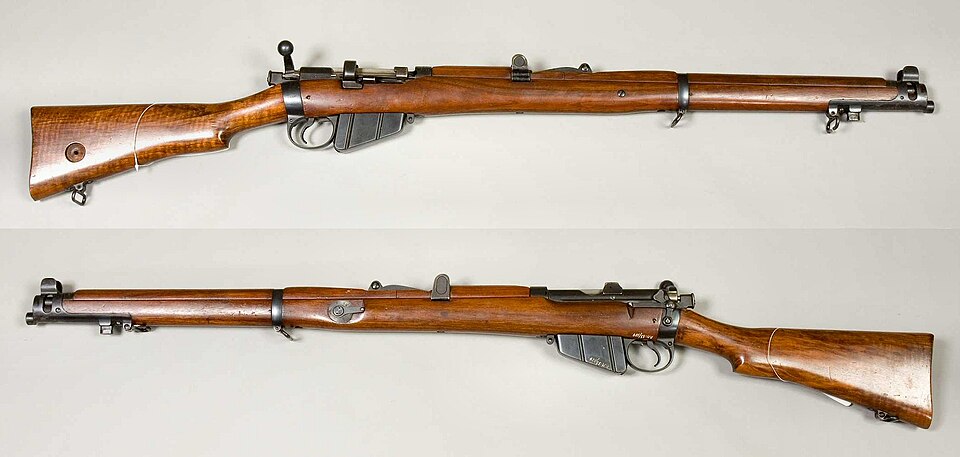
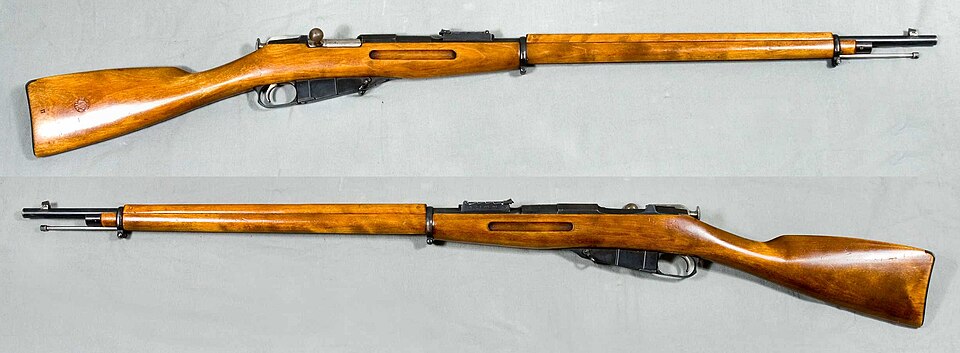
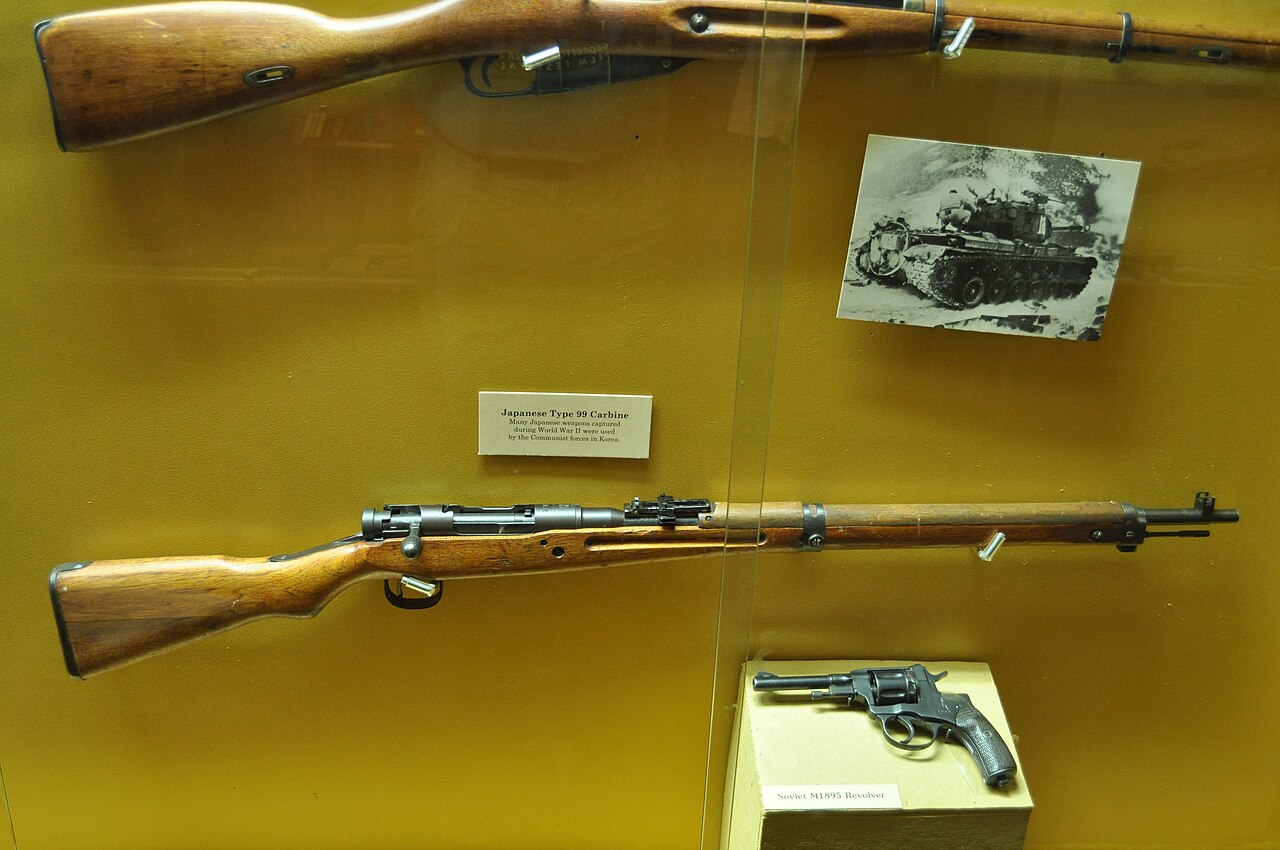
If you see a long gun with a straight stock that aligns with the barrel axis, you're almost certainly looking at a bolt-action from before 1960. The straight stock exists because the bolt handle sticks out to the side.
Within that family, details separate countries. A British Lee-Enfield has a bulbous magazine protruding below the stock. A German Mauser has a slimmer, more tapered stock with a pronounced pistol grip at the rear. A Russian Mosin-Nagant looks almost crude by comparison: a straight, thick stock with minimal taper and a bolt handle that juts out at a sharp angle.
Japanese Arisaka rifles have an unusually long receiver relative to the barrel, with a stock that seems to swallow the rear of the action. The two-piece stock with a visible joint near the middle is another quick giveaway.
The interwar submachine gun shape
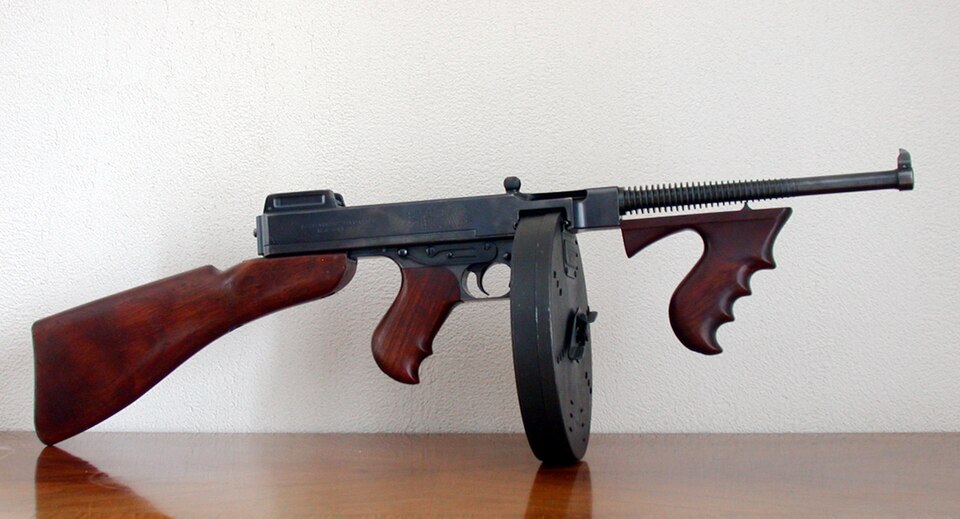
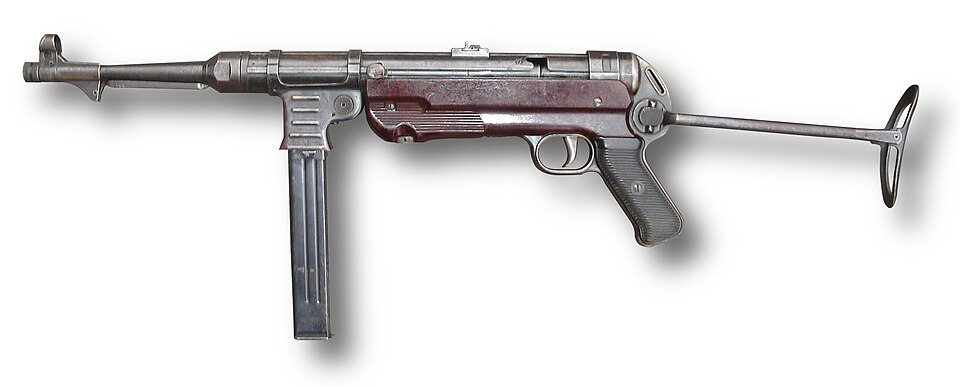
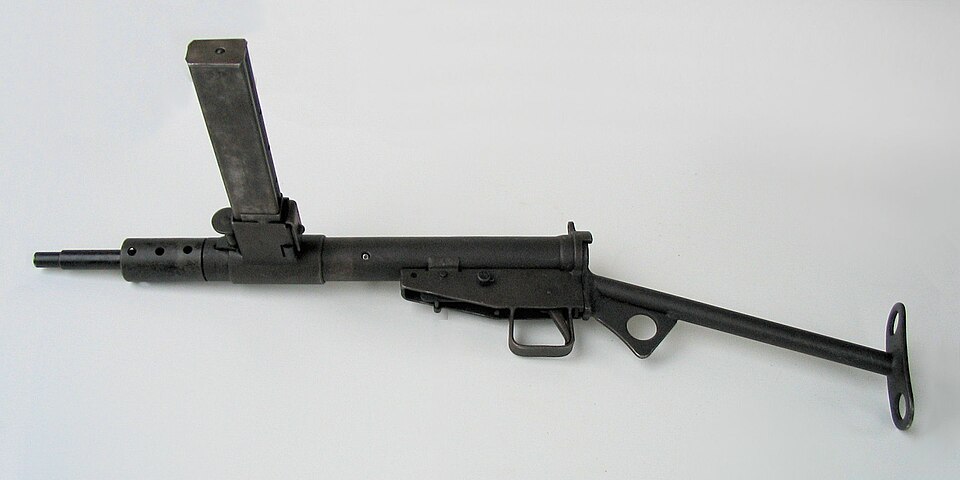
Submachine guns from the 1920s through the 1940s share a silhouette so consistent that you can spot one instantly. Short barrel, box magazine, and a stock that either folds or is just a wooden plank attached to the back. The balance point sits far forward because of the heavy magazine.
The Thompson breaks this mold slightly with its drum magazine and forward-leaning pistol grip, but even then the proportions scream "1920s American." The vertical foregrip and cooling fins are silhouette features that identify it from across a room.
The German MP 40 is sleeker, almost tubular. The folding stock disappears into the receiver, leaving a clean, straight tube. The side-mounted magazine well gives it an asymmetrical profile.
Soviet submachine guns like the PPSh-41 have a completely different feel. The wooden stock is crude but substantial. The barrel jacket with its cooling holes creates a textured silhouette that catches light differently. It looks heavier and more solid than its German counterpart.
Postwar battle rifle proportions
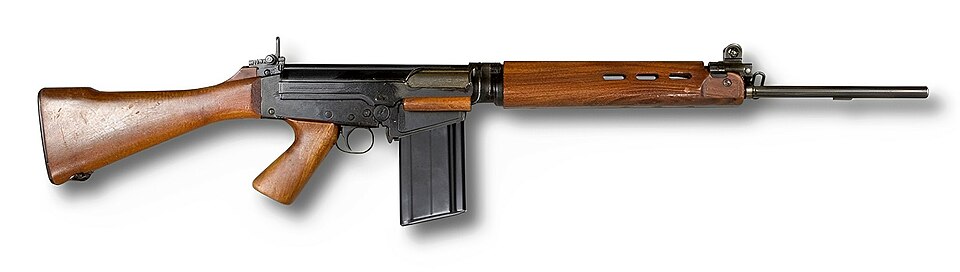
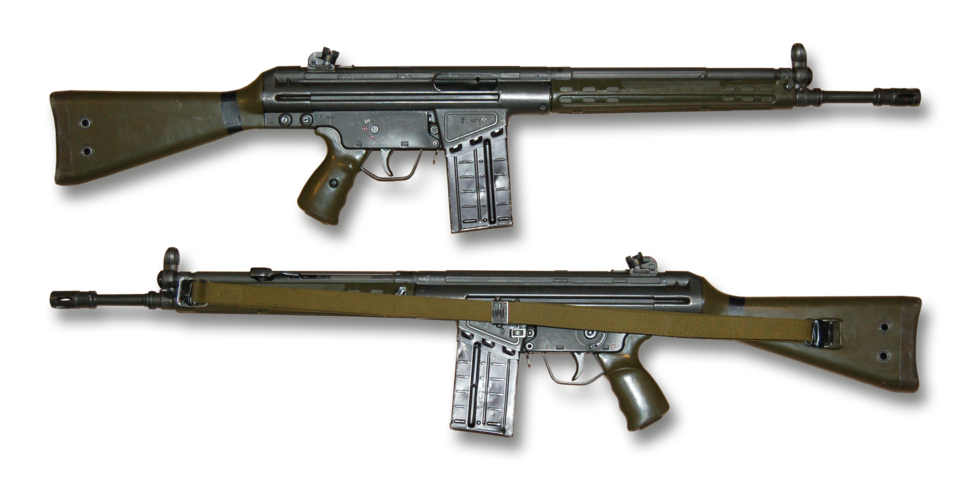
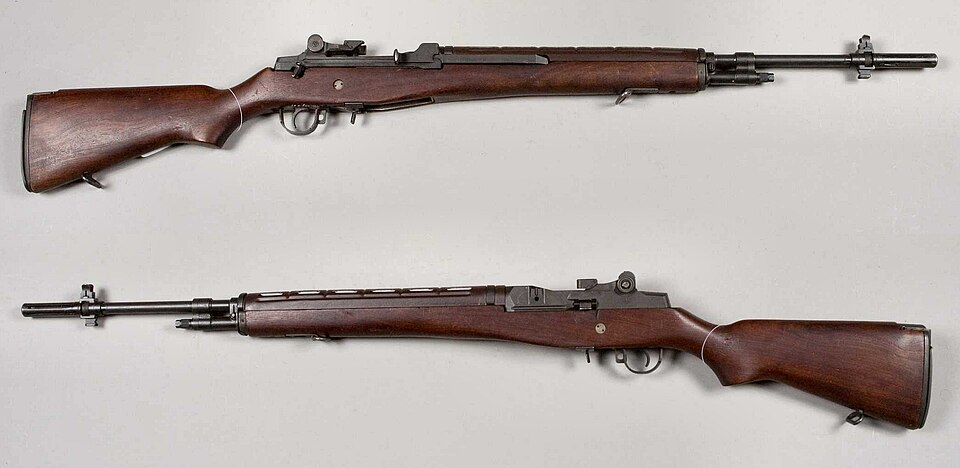
After World War II, every major military switched to self-loading rifles. You can spot one by its straight magazine, usually twenty rounds, protruding down from the receiver.
The FN FAL has a stock that drops noticeably away from the bore axis. That angled stock is the visual signature of the "right arm of the Free World." The carrying handle above the receiver adds a hump to the top line. Even in poor light, that profile identifies the FAL.
The German G3 has a protruding charging handle on the left side, creating visible asymmetry. The American M14 sits between bolt-actions and assault rifles, with a moderate stock angle and a gas cylinder under the barrel that adds a second horizontal line.
The assault rifle revolution
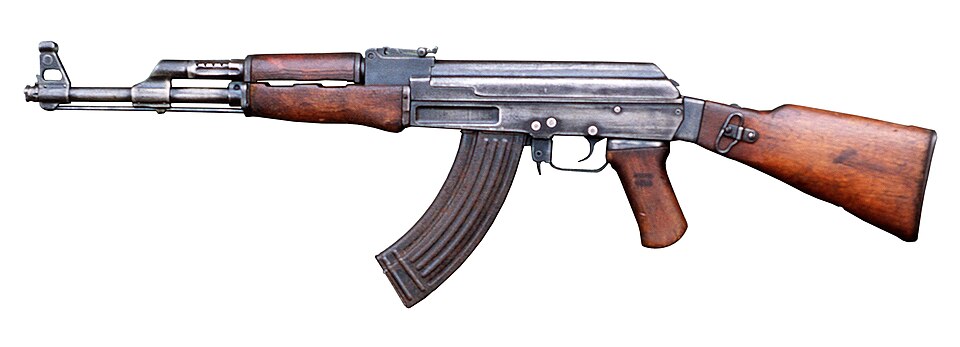
Assault rifles introduced shorter barrels, curved magazines, and a new family of silhouettes. The AK-47 is probably the most recognizable profile on Earth. The curved thirty-round magazine, the slightly dropped stock, and the clean rectangular receiver create a silhouette millions can identify.
Soviet AKMs have a stamped receiver with visible rivet lines. Chinese Type 56 rifles often have a full-width hood over the front sight. East German AKs have a distinctive side-folding wire stock that looks almost fragile.
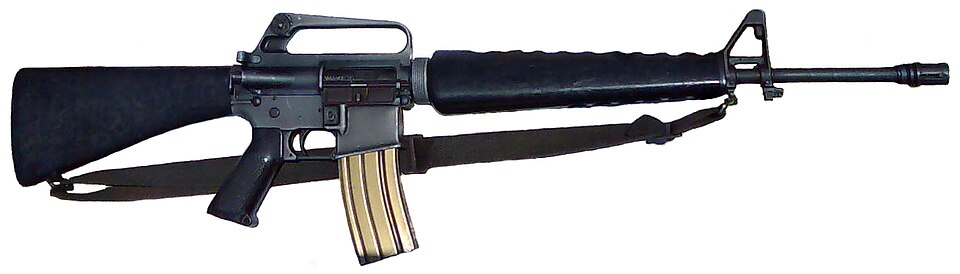
The American M16 family looks nothing like an AK. The silhouette is light, slender, and almost delicate. The straight-line stock sits directly behind the receiver, the handguard is round and ribbed, and the magazine is straight rather than curved. The triangular front sight base separates early M16s from later variants.
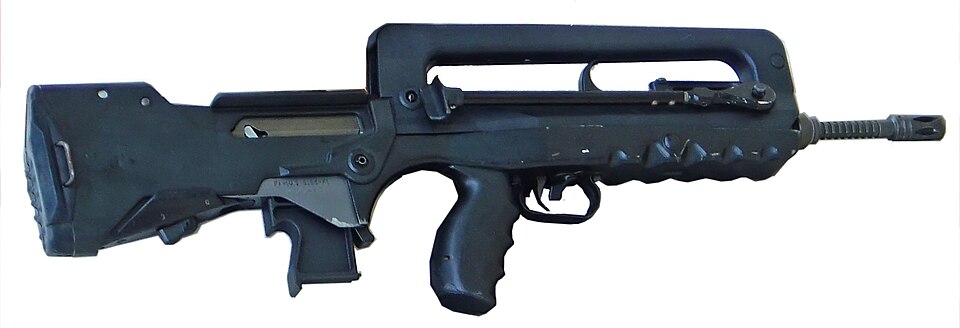
European bullpup rifles of the 1970s and 1980s flip the silhouette completely. The French FAMAS has a triangular profile unlike anything else. The British SA80 looks like a conventional rifle pushed backward into the stock. The Austrian Steyr AUG is so visually clean that it looks like science fiction.
Handgun silhouettes
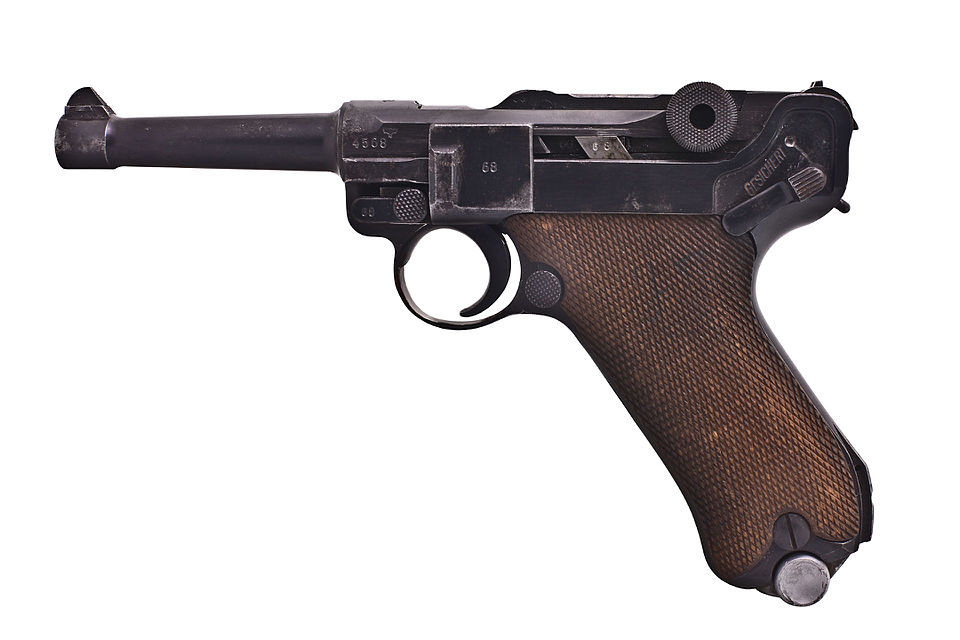
Handguns are harder because the envelope is smaller, but the same principles apply. A Luger has a silhouette unlike anything else: the toggle-lock action creates a hump at the rear that rises above the barrel line. Even someone who knows nothing about guns can learn to spot a Luger from its outline.
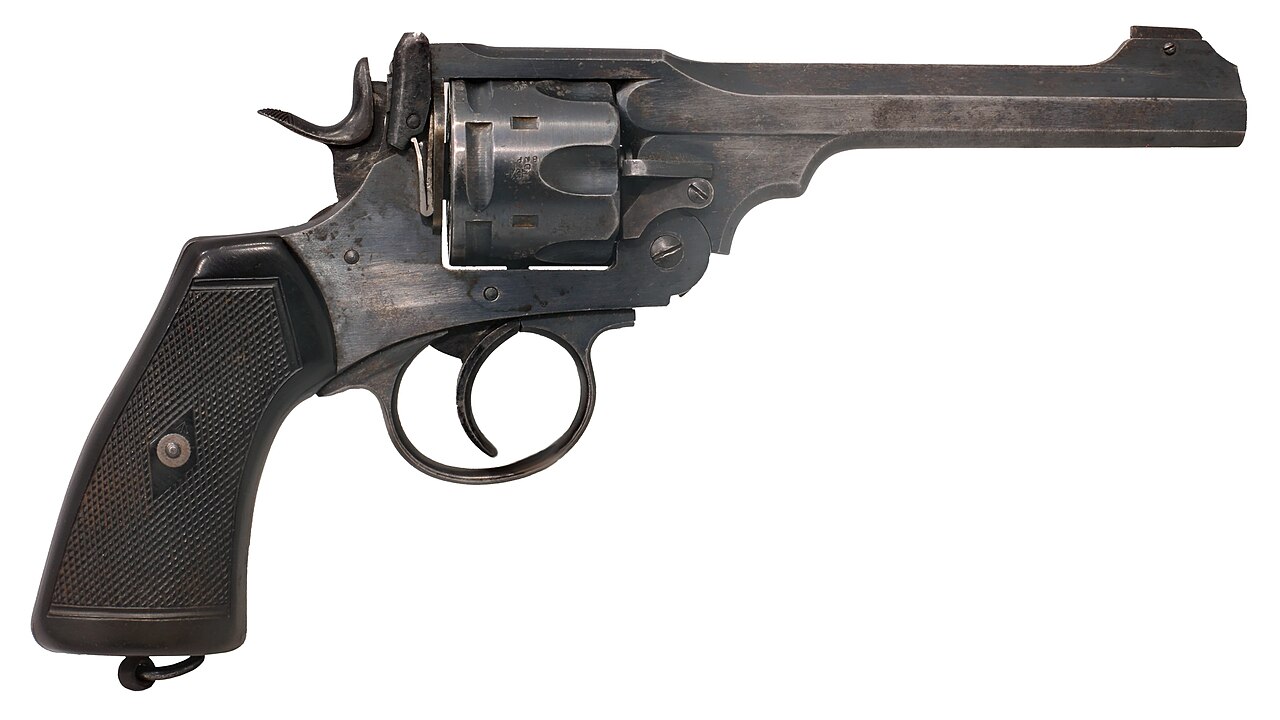
Revolvers are easier. The cylinder bulge is immediate. A Colt Single Action Army has a straight, primitive grip angle with a long flat barrel. A Smith & Wesson has a more modern grip angle and a heavier barrel. A Webley has a bird's-head grip that curves downward, identifying British handguns instantly.
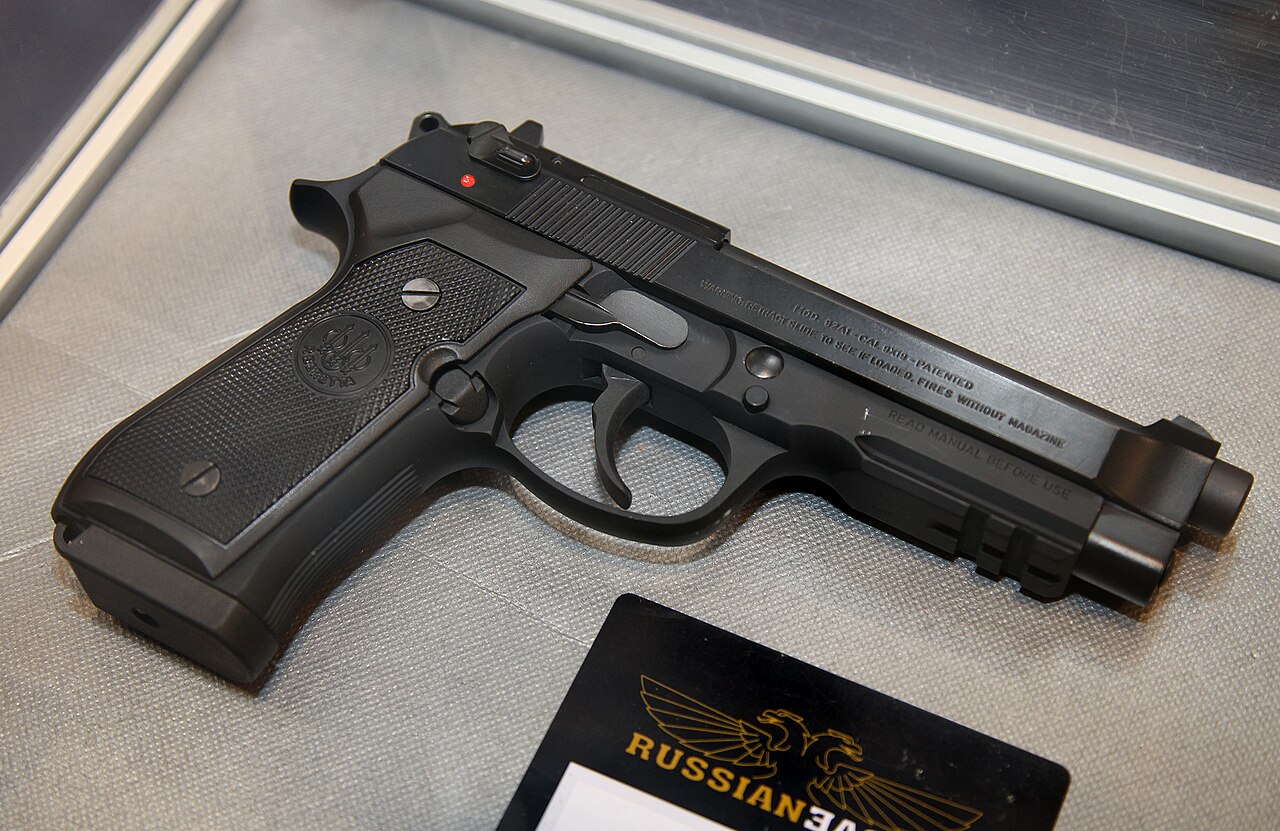
Modern semi-automatics converged on similar shapes, but differences persist. The SIG P226 has a taller slide than a Glock. The Beretta 92 has a slide that rides visibly higher, creating a step at the rear. The CZ-75 has a slide that rides inside the frame rails, making it look squarish compared to the rounded slides of competitors.
Machine guns and heavier weapons

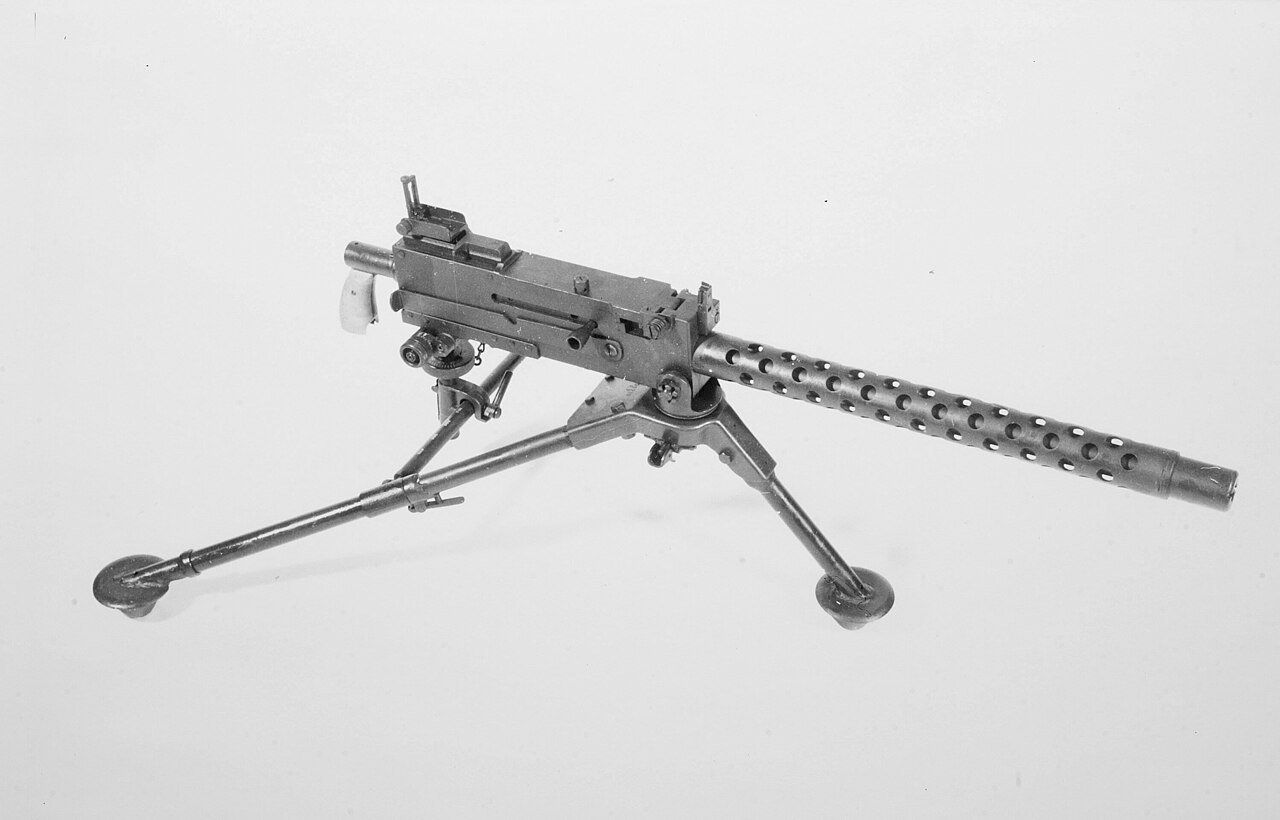
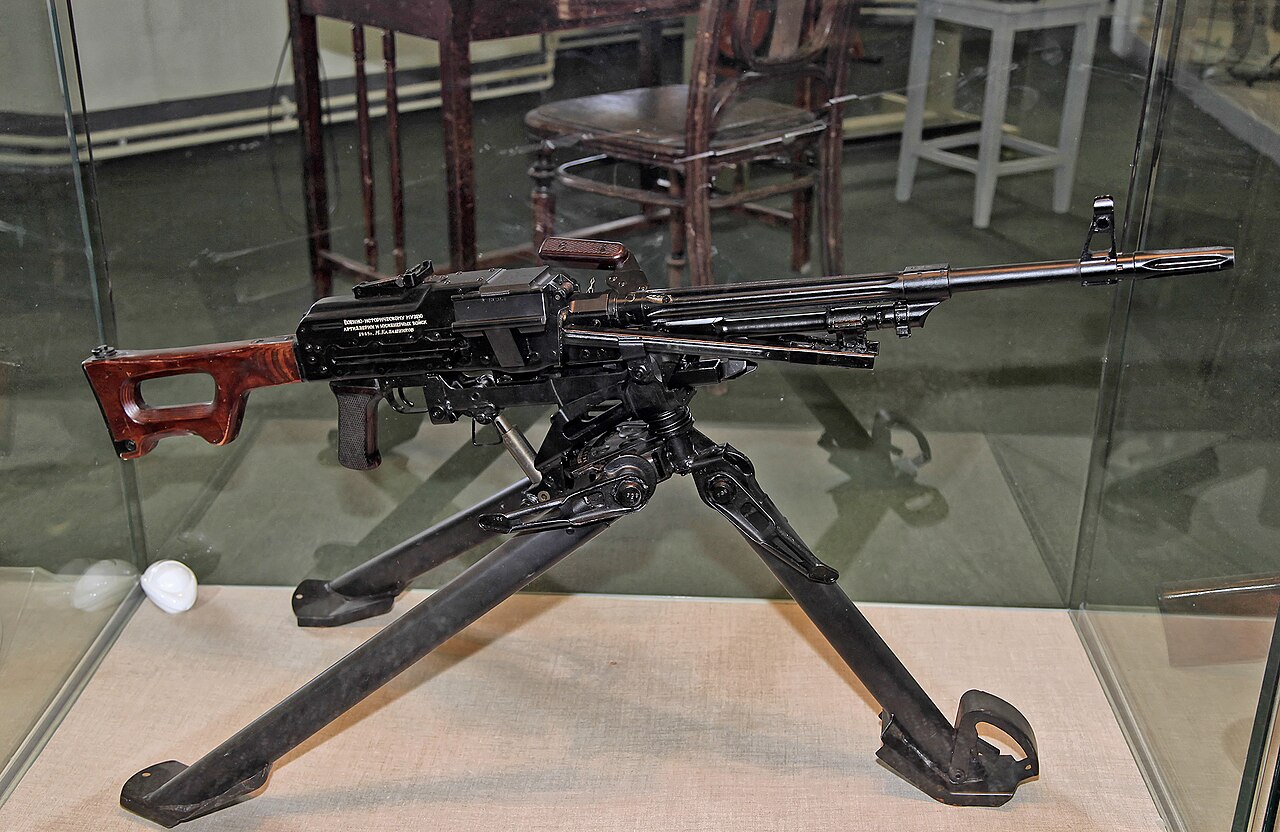
Machine guns have the most distinctive silhouettes because they are built around features with no parallel in rifles or handguns. A belt-fed machine gun has a feed tray or block protruding from the side, creating an asymmetrical profile.
The German MG 42 has a receiver so short relative to its barrel that the gun looks like a barrel with a grip attached. The American M1919 has a large rectangular receiver with a prominent top cover and a side-mounted box for expelled links.
The Russian PK machine gun is often mistaken for an oversized AK, which makes sense because it shares lineage. The silhouette is longer and heavier, but the curved magazine and general outline give it away as a Kalashnikov derivative.
Practice makes it automatic
At first everything looks like "a rifle" or "a pistol." Then you notice some rifles have straight stocks and others have dropped stocks. Some pistols have humped slides and others have flat ones. After a few weeks of conscious attention, your brain starts filing these shapes away without effort.
That is one of the hidden benefits of playing Gun Guesser. You see dozens of silhouettes in a single session, and your subconscious builds a mental catalog whether you mean to or not. The shape of a gun is not arbitrary decoration. It is the physical record of its designer's priorities, constraints, and national background.
Gun Guesser is an educational geography and history game. We do not endorse, promote, or facilitate the use of firearms. All guides cover external visual characteristics for historical identification purposes only.